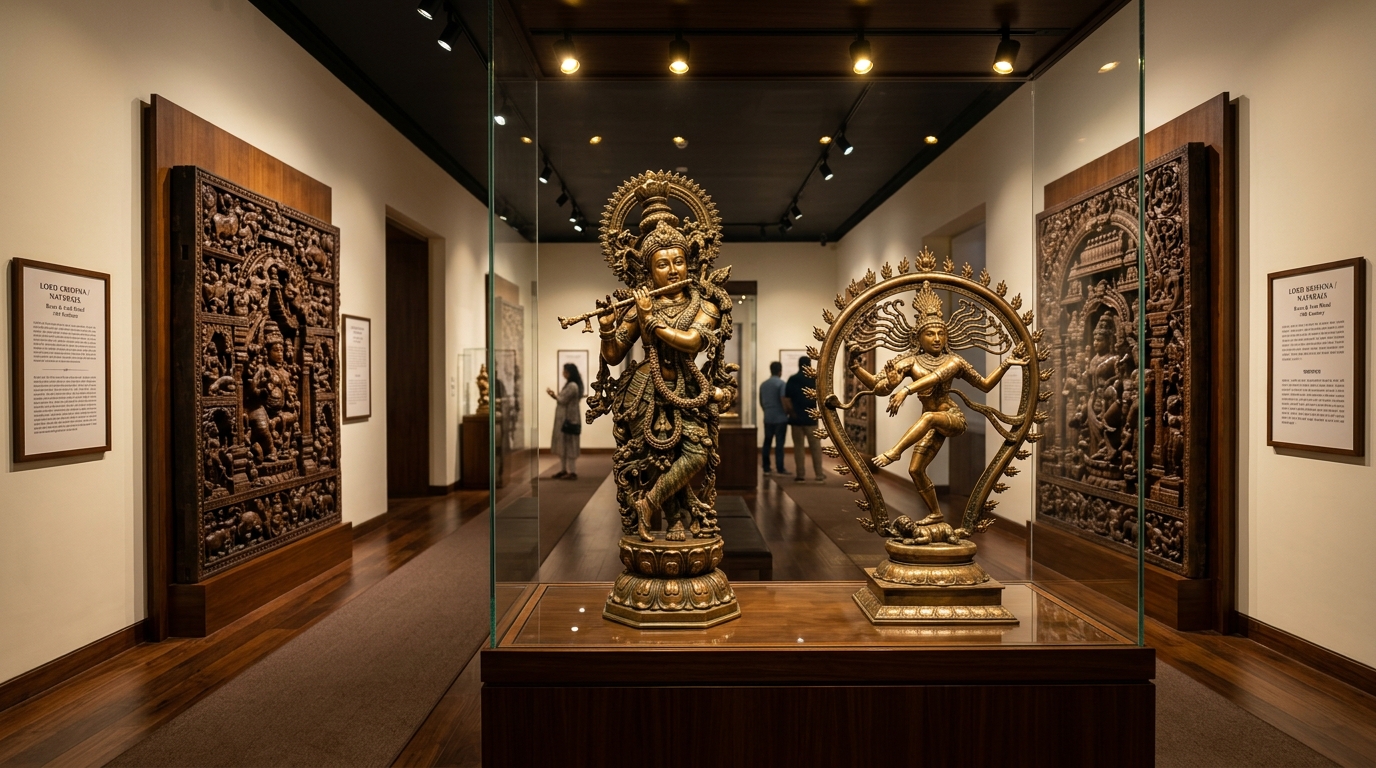
Dhokra casting is one of humanity’s oldest continuous metal crafts, tracing its origins over 4,000 years to the iconic Dancing Girl of Mohenjo-Daro. In Odisha’s tribal belts of Dhenkanal and Rayagada, this primitive yet sophisticated lost-wax method produces breathtaking brass artifacts.
The artisan begins by sculpting a rough inner core from riverbed clay and sand. Once dried, pure natural beeswax, mixed with dammar tree resin and mustard oil, is extruded into fine pliable threads. The artisan winds these wax threads over the clay core to fashion intricate ornaments, jewelry, and deity features.
The wax model is coated with multiple layers of fine clay mixed with rice husk. Channels are created for molten metal intake and wax escape. The mould is dried slowly in the shade for several days.
Placed into a traditional subterranean pit furnace fueled by charcoal, the mould is heated to over 1,100°C. The wax melts and drains away ("lost wax"), leaving an empty hollow chamber. Molten bell metal or brass is poured into the cavity, filling every minute microscopic impression left by the wax threads.
Leading archival documentation and preservation of Kalinga architecture at Orient Crafts Museum, Bhubaneswar.
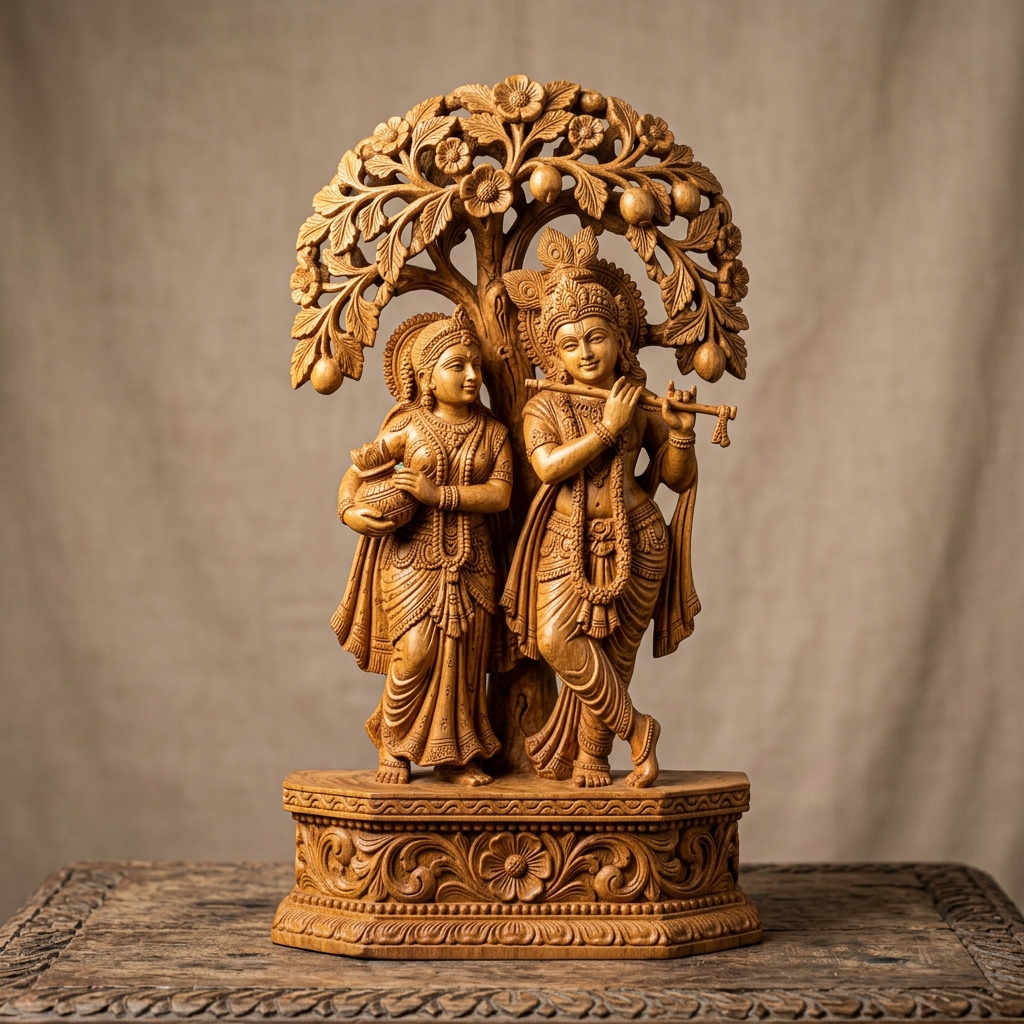
Commission custom sandstone sculptures, brass idols, or teakwood mandirs with direct sculptor consultation.
Call +91 8093417969